
| Quick answer: 192.168.0.1 is the factory gateway on most D-Link, Tenda, and many older Netgear routers. Connect to the router, open http://192.168.0.1, and sign in. D-Link ships with admin and a blank password, Tenda with admin and admin. |
192.168.0.1 and 192.168.1.1 are the two addresses that cover almost every home router. The split is largely historical: D-Link, Tenda, and older Netgear settled on 192.168.0.1, while Linksys, Asus, and most ISPs chose 192.168.1.1.
Both are the first usable host in the 192.168.0.0/24 and 192.168.1.0/24 private ranges. Your router only answers on the one it was set to, so the right address depends entirely on your brand.
Routers That Use 192.168.0.1 by Default
These brands ship many models on this gateway. Always confirm the exact default on the sticker under your unit, since credentials change by model and firmware.
| Brand | Example models | Username | Password | Verify |
|---|---|---|---|---|
| D-Link | DIR-615, DIR-825, DIR-842 | admin | (blank) | support.dlink.com |
| Tenda | AC6, AC10, F3 | admin | admin | tendacn.com |
| Netgear (older) | WGR614, WNR2000 | admin | password | netgear.com/support |
| TP-Link (some) | Archer C7, TL-WR841N | admin | admin or set on setup | tp-link.com/support |
How Do I Log In to 192.168.0.1?
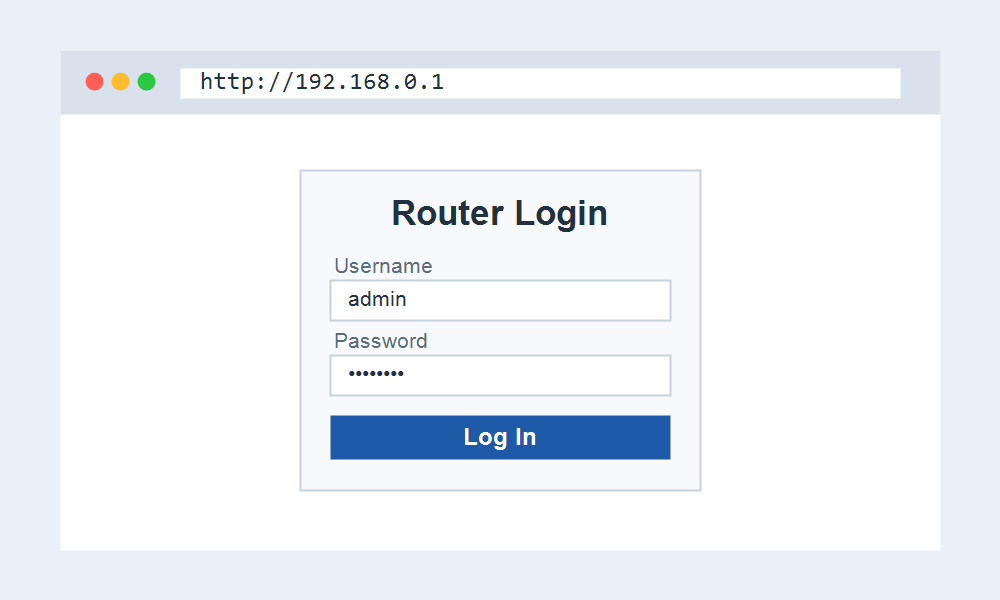
- Join the router Wi-Fi or plug in an Ethernet cable.
- Type http://192.168.0.1 in the browser address bar, not a search box.
- Enter the username and password from the table or your router label.
- Open Wireless or Wi-Fi settings to change your network name and password.
192.168.0.1 or 192.168.1.1: How to Tell
If 192.168.0.1 shows nothing, your router almost certainly lives on 192.168.1.1 instead. The fastest way to be sure is to read your device default gateway rather than guessing.
On Windows, run ipconfig in Command Prompt and read the Default Gateway line. On a phone, open your Wi-Fi network details and look for Gateway or Router.
A related address is 192.168.0.254, used by many D-Link and TP-Link range extenders and access points that sit on the same 192.168.0.x network as the main router.
Common Problems on This Gateway
Most 192.168.0.1 issues come from being on the wrong subnet. If your computer received an address like 192.168.1.x, it cannot reach a 192.168.0.1 router until it rejoins the correct network.
An IP conflict is the other frequent cause. If two devices claim 192.168.0.1, the panel loads erratically. Reboot the router, then reconnect a single device to test a clean connection.
If the Password Was Changed
D-Link and Tenda units rarely keep the factory login once set up. If admin and the default do not work and the label does not help, a factory reset is the reliable fix.
Hold the recessed reset button for about 10 seconds until the lights blink. This restores 192.168.0.1 and the default credentials, but erases your Wi-Fi name and password.
Frequently Asked Questions
What is the default password for 192.168.0.1?
It depends on the brand. D-Link routers usually use admin with a blank password, Tenda uses admin and admin, and older Netgear uses admin and password. Check your label to confirm.
Why does 192.168.0.1 not open on my router?
Your router likely uses 192.168.1.1 instead. Confirm the real address by checking your default gateway, and make sure you are connected to the router, not mobile data.
Is 192.168.0.1 the same as 192.168.1.1?
No. They are two different gateways on two different subnets. A router uses one or the other, never both, so only the address matching your brand will load.
What do people mistype for 192.168.0.1?
Common slips include 192.168.o.1 with a letter o, 192.168.0.l with a letter l, and 192.168.01 with a missing dot. The correct form is 192.168.0.1 with four numbers.
Login Web Addresses for 192.168.0.1 Routers
Several brands let you reach 192.168.0.1 through a friendly name instead of the numbers. These addresses open the same panel while you are connected to the router.
Try dlinkrouter.local on D-Link units, tplinkwifi.net on TP-Link, and tendawifi.com on many Tenda routers. If a name fails to load, fall back to typing 192.168.0.1 directly.
These hostnames rely on the router local DNS, so they work only on its own network. On mobile data or a different Wi-Fi, the numeric 192.168.0.1 is more reliable.
Related IP Address Guides
Using a different gateway or a device on the same network? These guides help.